
Leadership
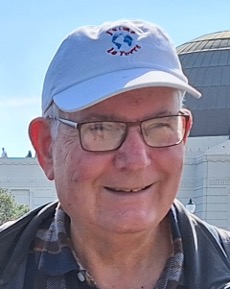
Mike Abkin
Mike Abkin currently serves as a trustee of the National Peace Academy, having previously served on its board of directors and held various officer and staff positions. He is past president and current advisory council member of the Global Alliance for Ministries and Infrastructures for Peace, serves on the Leadership Council of Elders Action Network, volunteers with the Villages of San Mateo County, and has volunteered with Nine Gates Mystery School. He previously served with Peace Partnership International, The Peace Alliance, and the Foundation for Global Community. In his former technical career, he applied systems analysis and simulation modeling for agricultural development and air transportation, including projects in Nigeria and Korea.
Read more…
Mike also served with the Peace Corps in Nigeria and earned his doctorate in systems science at Michigan State University. Mike enjoys exploring the intersection of science and spirituality as well as spending time with family, traveling in the world, walking in nature, and musing in prose and poetry.
Trustee, National Peace Academy
Email: mike@nationalpeaceacademy.us
“…peace is the wholeness created by right relationships with oneself, other persons, other cultures, other life, Earth, and the larger whole of which all are a part.” ~Earth Charter

Patti Bailie
Dr. Patti Bailie, NPA Trustee, is Assistant Professor of Early Childhood Education at the University of Maine at Farmington. She is also a trustee of the Biosophical Institute Foundation. Dr. Bailie has worked in the field of nature-based early childhood education for nearly 30 years, previously serving as Assistant Director of the Nature-based Early Childhood Education Certificate Program at Antioch University New England, in addition to teaching courses there on nature-based early childhood curriculum. Previous experience includes working at three different nature centers in the Midwest, as founding director of the Schlitz Audubon Nature Preschool in Milwaukee, WI, co-director of the Early Childhood Outdoors Institute in Omaha, NE, and early childhood environmental educator at the Nature Center at Shaker Lakes in Cleveland, OH. She also serves on the advisory board of the Natural Start Alliance and as consulting editor of the International Journal of Early Childhood Environmental Education. Her research interests include identifying high quality practices of nature-based preschools. She has spoken and published nationally and internationally about connecting young children to nature.

Mark Chupp
Mark G. Chupp, PhD, MSW is an associate professor at the Jack, Joseph and Morton Mandel School of Applied Social Sciences of Case Western Reserve University. He is founding director of the Community Innovation Network, a resource for communities and practitioners seeking strength-based approaches to community change. Mark’s research and practice over 30 years has focused on community building, community development and inter-group conflict transformation. Mark served as co-director of the Social Justice Institute at Case Western Reserve University from 2020-2023 and the SJI Education Coordinator in 2024.
Mark began his career in restorative justice, directing the first Victim Offender Reconciliation Program in the US. Dr. Chupp is an international consultant and trainer in conflict transformation and peacebuilding. He lived in Costa Rica and Nicaragua from 1988 to 1991, where he worked extensively throughout Central America. Of note, he accompanied Peace and Reconciliation Commissions during the negotiation of the end of the civil war in Nicaragua. He also provided leadership in the establishment of the Culture of Peace Program and a UN Local Zone of Peace in post-war El Salvador.
Read more…
Mark holds a PhD in social welfare from Case Western Reserve University. He earned his MSW from the University of Michigan with a concentration in community organization, which led to him serving as an organizer in a marginalized neighborhood facing intractable internal conflict. He also organized a comprehensive community assessment and founded a nonprofit organization focused on community mediation and violence prevention. Mark designed an appreciative inquiry process for promoting race relations in a Polish American neighborhood that was experiencing a large increase in African American residents. This work was the focus of his dissertation, which identified pathways for building trust across racial differences. He then collaborated with other practitioners to establish Appreciative Inquiry for Community and Social Change, one of the first systematic efforts to adopt appreciative inquiry for nonprofit and community contexts. He has published numerous theory and practice oriented articles, manuals and book chapters. A Spanish language manual he co-authored with John Paul Lederach on transforming conflict and violence has been used throughout Latin America. Mark is a founding trustee of the National Peace Academy, an adjunct faculty at the Summer Peacebuilding Institute of Eastern Mennonite University, and a member of the faculty of the Asset Based Community Development Institute based at DePaul University.
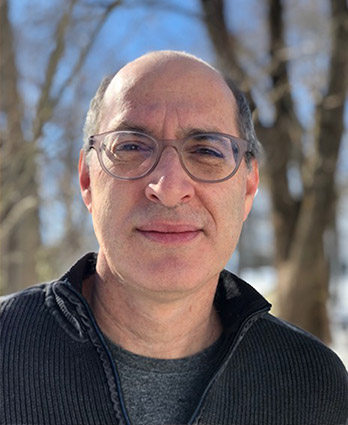
Lou Ensel
Lou Ensel is a founding trustee and past Board President of NPA. He is the Executive Director of The Biosophical Institute, a private foundation working to build relationships and community through ethical practices and peace initiatives. Lou has over 25 years of government and non-profit experience in community building, diversity education and mediation. He lives with his family in Bath, ME.

Kristin Famula
Kristin (she/her) loves the spaces of intersection between ministry, peacebuilding, and lifelong learning. As a minister and conflict engagement consultant, she facilitates opportunities for thinking and dreaming in new ways. This happens in interpersonal relationships, congregational dynamics, and in all of our larger group interactions – all those times when being human gets interesting. She especially loves those times of learning and transformation that happen in community. She has witnessed those moments most vividly when working as a program leader for the Unitarian Universalist College of Social Justice; through pilgrimages with the Living Legacy Project, (an organization leading pilgrimages to the southern United States to explore Civil Rights movement history and its connection to our current work for racial justice), and in peacebuilding programs with the National Peace Academy – when the idea of peacebuilding becomes less abstract and more tangible and practical.

Tony Jenkins
Tony Jenkins PhD is an Assistant Professor in the Program on Justice and Peace Studies at Georgetown University. He has 24+ years of experience directing and designing peacebuilding and international educational programs and projects in the fields of international development, peace studies, and peace education. Since 2001, Tony has served as the Managing Director of the International Institute on Peace Education (IIPE) and since 2007 as the Coordinator of the Global Campaign for Peace Education (GCPE).
Read more…
Tony works frequently with the UN & UNESCO, most recently working as a technical consultant on the revision of the UNESCO Recommendation on Education for Peace, Human Rights and Sustainable Development (2022-2024) and speaking on the International Day of Education as a panelist on the High Level Dialogue on Learning for Lasting Peace at the United Nations Headquarters (2024). Tony has significant experience designing and developing academic programs in peace studies and peace education including the MA Programme in Peace Education at the UN mandated University for Peace. In 2019, in recognition of his curricular work with World BEYOND War, Tony received the Educators’ Challenge Award and People’s Choice Award from the Global Challenges Foundation in partnership with the London School of Economics Institute of Global Affairs.
Tony’s applied research is focused on examining the impacts and effectiveness of peace education methods and pedagogies in nurturing personal, social and political change and transformation. He is also interested in formal and non-formal educational design and development with special interest in teacher training, alternative approaches to global security, systems design, disarmament, and gender.

Dorothy J Maver
Dorothy J Maver, PhD is an educator and peacebuilder whose keynote is inspiring cooperation on behalf of the common good. Dot is a co-founder of the Global Silent Minute, the National Peace Academy USA, Global Alliance for Ministries and Infrastructures for Peace, and the Seven Ray Institute. She presently serves as Vice President at The JUTtING Corporation with a focus on development of technology that facilitates whole systems healing. Dot also served as founding executive director of the River Phoenix Center for Peacebuilding (RPCP) and The Peace Alliance. She is co-author of the book Conscious Education: The Bridge to Freedom; a Fellow with the World Business Academy; a board member with Garden of Light; and serves on the International Cities of Peace Advisory Council, the Inamori International Center for Ethics and Excellence Advisory Board, and is an advisor for the Compassion Games.
Read more…
From 2005–2007 Dot served as founding Executive Director of The Peace Alliance and Campaign for a US Department of Peace, and prior to that she was the National Campaign Manager for Kucinich for President 2004. In the world of fast-pitch softball Dr. Dot is known for her revolutionary fast-pitch hitting technique, The Maver Method: Secrets of Softball Hitting Success. Dot’s personal interests include esoteric studies, hiking, and playing guitar.
www.globalsilentminute.org
www.nationalpeaceacademy.us
www.centerforpeacebuilding.org
www.gamip.org

Tara Stuart
Tara Stuart, D.Ed, Trustee of The National Peace Academy. Tara serves as Board Member of Lifebridge Foundation, of The United Nations Spiritual Caucus, and of Kosmos Journal. She is also Professor Emeritus in Communication, Keene State College, Co-founder of The Hill Center for Peacebuilding, Co-founder of The Hill Center for Psychosynthesis in Education, and Founder of the New Dimensions Program with the School for International Training initiating semester abroad for gifted teenagers.
- Initiated Semester International Exchange Program for College Students and Faculty at Keene State College
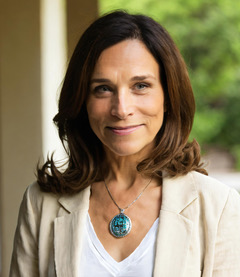
Lisa Worth Huber
Lisa Worth Huber, PhD, serves as President of the National Peace Academy. She is on the board of directors and faculty of the Global Peace Education Network (G-PEN), which currently works in partnership with UNESCO. She is a member of the Advisory Council for the Connecticut Center for Nonviolence, where she is a mentor to teaching artists pursuing their certification in Kingian Nonviolence. Lisa designed, implemented, and served as Academic Director for Connecticut’s first accredited MA program in Peace and Conflict Transformation, and was a member of the international Launch Team for the Global Sustainability Fellows program, and a trainer for the UnGUN Institute: Collective Trauma Healing Through the Arts. She is an adjunct professor of Sociology at Western Connecticut State University and the former Academic Director of the MA program in Writing and Oral Traditions. A consultant and trainer, Lisa works with various dialogue and peacebuilding practices from Bohmian Dialogue to Kingian Nonviolence. She is a participatory action researcher focused on empathy development, one of the essential skills for creating a compassionate global society.
Read more…
Additionally, Lisa has been a teaching artist for several decades, working in universities, K-12 classrooms, homeless shelters, and safe houses, and is the first recipient of the Frank McCourt Prize for Excellence in Teaching. Along with designing and implementing nonviolent and peacebuilding programs, Lisa incorporates the arts to elevate voices, address injustice, heal trauma and PTSD, nurture compassion, and imagine new futures. Lisa blends story in its myriad forms with peace, humanitarian, social justice, and environmental concerns, and nurtures the development of creative activism and ecological stewardship.